Communication Settings
This section contains information on how to configure settings for external communication, including configuring email groups and health service notifications. Review the following for details:
Email Servers
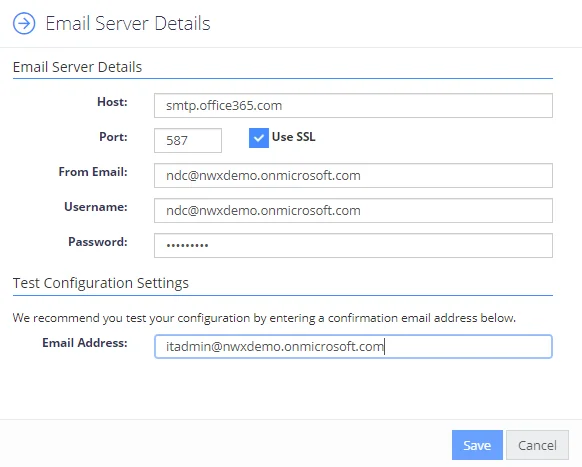
Configure email servers to enable external communication. For example, when the health service identifies an issue.
Edit existing servers by selecting Edit, or add new SMTP servers by selecting Add Email Server Configuration.

The SMTP details should be entered based on the values provided by your network team. Each configuration supports both SSL enabled SMTP servers, and those without SSL enabled.
Optionally, supply a test email address to test the configuration settings.
Email Groups
Email groups define a logical group of people to email — essentially a mailing list.
Each email group is linked to an SMTP server, so, before configuring an email group, you must configure your Email Servers.
To add a new group, select Add Email Server Group, or select Edit on each row to configure the group members.
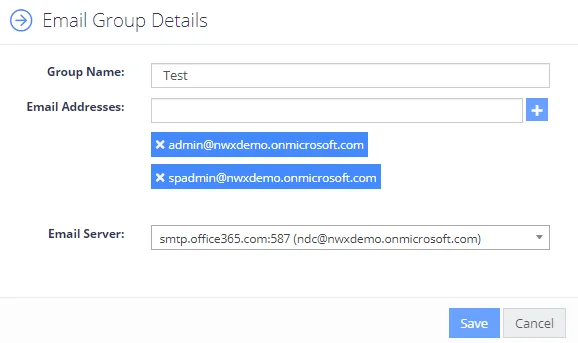
Each group can have one or more members and a friendly name. The system displays this name when you select an email group.
Health Service Notifications
Configure Health Service Notifications to email a specific group of people when an issue occurs in the product. Each notification configuration links to an email group, so configure your Email Groups before configuring notifications.
To add a new notification configuration select Add Notification Configuration, or select Edit on each row to change the configuration.

Set notifications to trigger on warnings or errors. By default, the system reports problems at any level.
You can enable or disable the Daily Summary. When enabled, this feature sends a summary email of outstanding problems each morning.
